
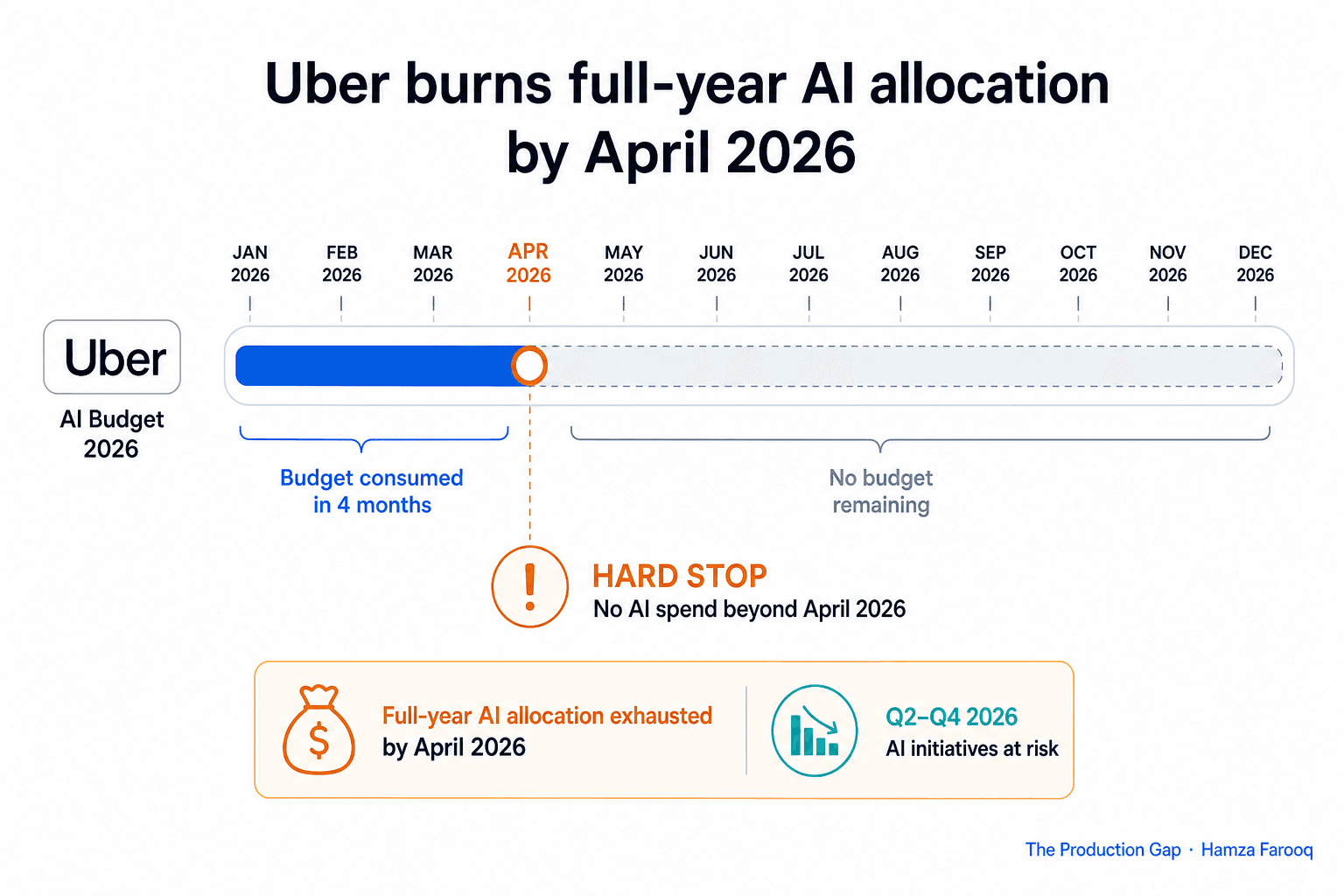
TL;DR: Agentic coding tools cost has crossed the threshold where CFOs are pulling it into formal budget review. Engineering leaders who arrive without a structured cost-per-output case will lose control of their own tooling decisions. Build your business case around measurable productivity returns such as cycle time, defect reduction, and deployment frequency, not token consumption, before finance reframes the spend as overhead to cut.
Key Takeaways
- Agentic coding costs blindside budgets: Token-based pricing means your AI tool bill can multiply overnight. Most finance teams never saw it coming.
- Uber and Microsoft set the warning: Uber burned its entire 2026 AI budget in four months; Microsoft cut Claude Code access after per-engineer bills became unsustainable.
- CFOs are now in the room: Agentic coding tools have crossed into executive-level scrutiny. Engineering leaders who do not get ahead of it lose control of their own tooling decisions.
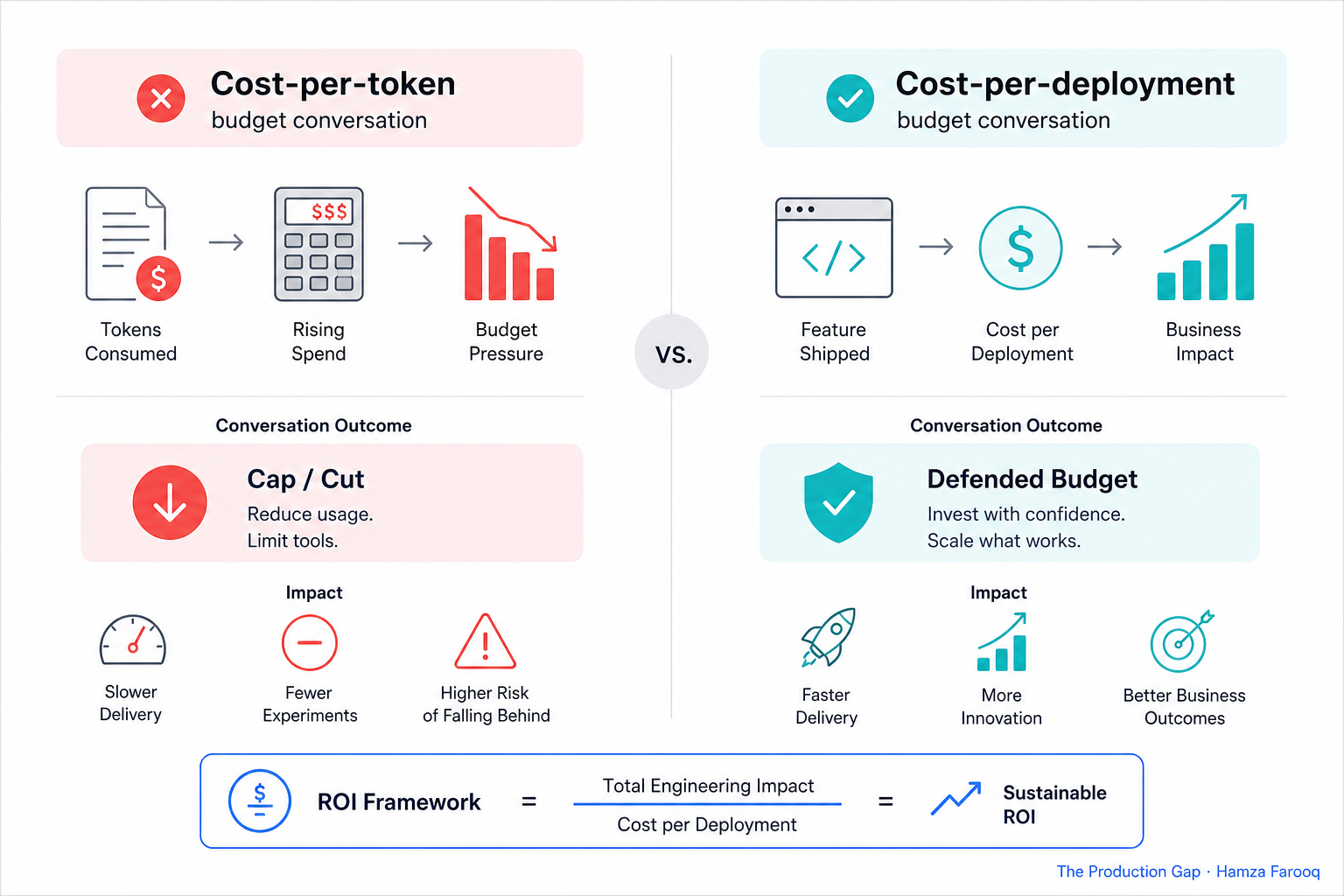
- Cost-per-output reframes the conversation: Cost-per-token loses the budget argument. Cost-per-feature or cost-per-deployment gives finance a number tied to real business value.
- Spend caps punish the wrong variable: A hard monthly cap cuts off highest-leverage work at peak productivity, a morale and output problem disguised as fiscal discipline.
- Build the governance case first: Engineering leaders who arrive with usage data, variance analysis, and a cost-control framework protect team access. Those who react after finance draws the line do not.
Why is agentic coding tool cost suddenly a CFO problem in 2026?
Agentic coding tools cost has moved from engineering discretionary spend into CFO-level scrutiny not gradually, but in a single quarter. Uber burned its entire 2026 AI budget in four months, with Claude Code as a primary driver. Microsoft and Uber both slashed AI coding tool access as token costs spiraled. Amazon has joined them. The winning path for engineering leaders is not defending the spend. It is translating it into a language finance already trusts.
Why are agentic coding tool costs spiraling so fast in 2026?
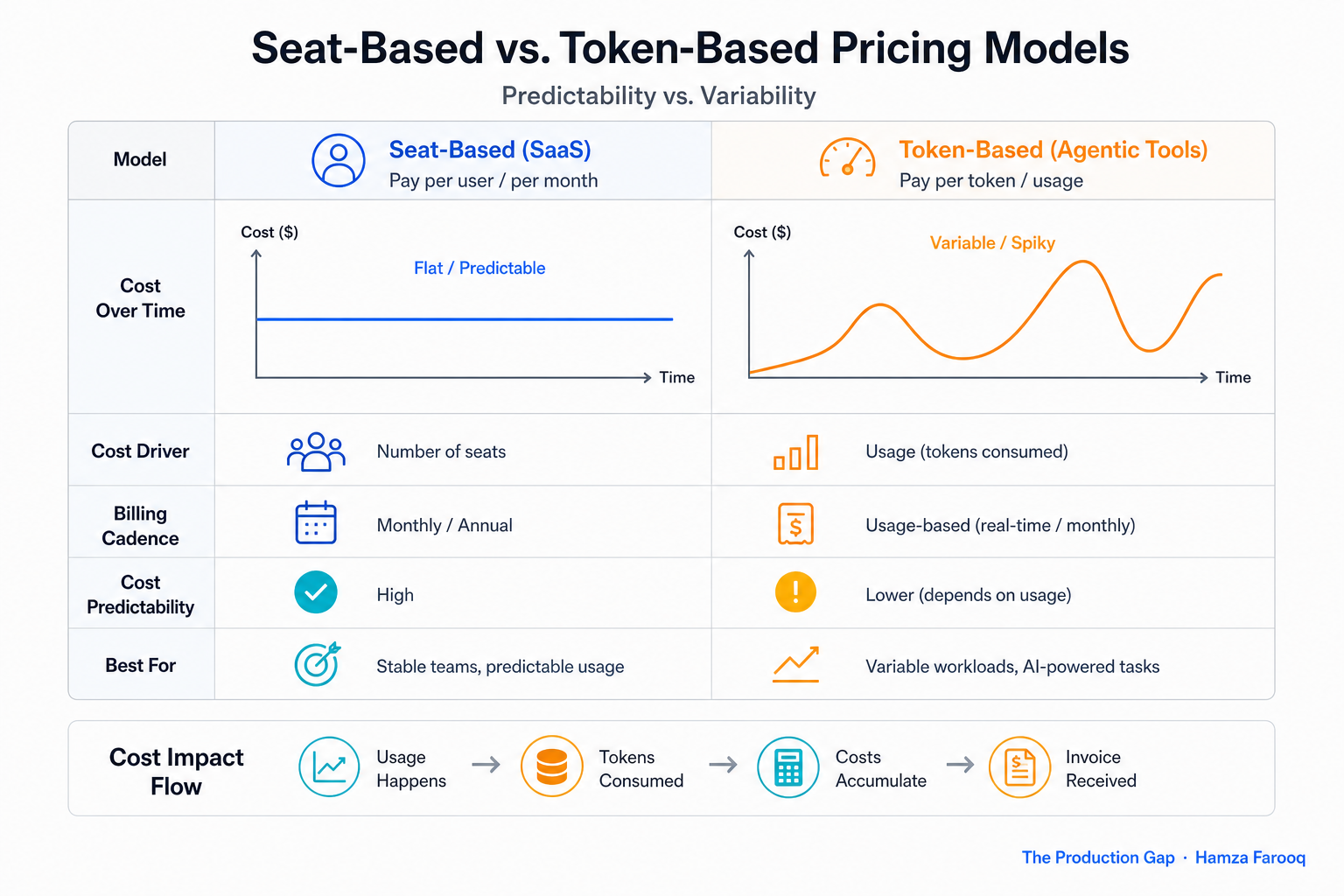
Agentic coding tool costs are spiraling because token-based consumption pricing scales with usage intensity, not seat count, which makes headcount-normalized budget frameworks structurally useless for forecasting them.
Traditional SaaS is flat: buy 500 seats and your bill is identical regardless of how hard people use the tool. Claude Code charges per token consumed. A single engineer running multi-file refactoring during a heavy sprint can burn through ten times what a lighter user consumes in a month. Finance forecasted a seat count and got a usage curve instead.
Uber, Microsoft, and Amazon, three of the most sophisticated technology organizations on the planet, hit this same structural surprise at roughly similar points in 2026. That is not an outlier problem. That is a systemic one. Budgeting Claude Code by headcount is like budgeting AWS EC2 by number of developers instead of compute hours. The cost itself is not the crisis. The mismatch between consumption-based pricing and seat-based budget frameworks is.
What procurement controls are enterprises putting on agentic coding tools, and why are spend caps the wrong answer?
Enterprises are reaching for hard per-employee monthly spend caps, but caps are the wrong instrument because they cut off highest-output engineers at peak productivity rather than eliminating actual waste.
A hard cap treats a senior engineer running a complex infrastructure migration exactly the same as a junior engineer running autocomplete. The engineers most likely to hit the ceiling are often the ones extracting the most value. Cut them off mid-sprint and you create rework costs that never appear in the same budget line as the savings.
The deeper issue is a governance gap. Most engineering organizations provisioned agentic tools in 2025 under existing software budgets, with no usage monitoring, no variance forecasting, and no cost attribution. Finance is now filling that vacuum with blunt instruments because engineering did not hand them anything sharper. Uber's cap is expected to be followed by others facing the same token cost escalation. Spend caps are finance's default when engineering does not provide a better control mechanism. The engineering leader's job is to provide one first.
How should engineering leaders reframe agentic coding tool spend as cost-per-output for a CFO?
Engineering leaders should convert cost-per-token into cost-per-deployment, cost-per-feature-shipped, or defect-reduction value, which are metrics finance can benchmark against real business outcomes.
- Measure baseline output metrics before agentic tools: deployment frequency, mean time to merge, defect escape rate, and feature cycle time.
- Attribute output delta to tool usage by identifying which teams and sprints produced measurable throughput gains during higher token spend periods.
- Present cost in output terms so finance evaluates the spend as a throughput investment, not a consumption line.
| Framing | What finance hears | Likely outcome |
|---|---|---|
| "We spent on Claude Code this quarter" | Uncontrolled consumption | Cap or cut |
| "Per-engineer token cost exceeded forecast" | Headcount-normalized overage | Seat-based cap applied |
| "Deployment frequency and defect rate improved measurably against baseline" (illustrative) | Engineering throughput metric | Conversation opens |
Tie this to the DORA metrics framework engineers already track. Finance does not need to learn a new system. They need the engineering output system translated into dollar terms.
How do you build the governance case before finance builds it for you?
Engineering leaders should establish usage monitoring, variance forecasting, and cost attribution before the next QBR because the leader who arrives with data controls the narrative.
Four actions make up the pre-QBR governance stack used in this guide:
- Usage monitoring by team and use-case type. Know which teams consume the most tokens and for what. Architecture generation consumes very differently than autocomplete.
- Variance analysis and scenario modeling. Present three scenarios: baseline, constrained (cap applied), and optimized (usage tiers by role and project phase). Scenarios demonstrate you understand the cost structure and have already worked through the tradeoffs.
- Cost attribution by output type. Map token spend to work streams such as feature development, bug remediation, test coverage, and documentation so spend stops looking like one undifferentiated line and starts looking like a portfolio with distinct return profiles.
- A recommended control mechanism that is not a cap. Propose usage tiers: senior engineers on complex migration work get higher monthly allocations; junior engineers on routine tasks get lower. This preserves the highest-value use cases while giving finance something to point to as discipline.
Arrive at the CFO meeting with a one-page summary: current spend, output delta, cost-per-output metric, and a proposed tiered control framework. The engineering leader who hands finance a governance framework owns the policy. The one who does not hands finance a blank page, and finance will fill it with a cap.
Frequently asked questions
Why did Uber cap AI spending on a per-employee basis? Uber implemented the cap after exhausting its entire 2026 AI budget within four months, a reactive finance decision rather than a planned governance outcome, and exactly the scenario engineering leaders should work to prevent.
What alternatives exist if finance restricts access to high-cost agentic coding tools? Implement usage tiering by role and project type, negotiate enterprise agreements with token commitment discounts, and evaluate open-weight alternatives where inference costs can be controlled through self-hosted deployment.
How do you present an ROI case for agentic coding tools to a CFO? Convert token spend into cost-per-output metrics tied to DORA benchmarks such as deployment frequency, cycle time, and defect escape rate so the CFO evaluates tool spend the same way they evaluate any capital investment: output per dollar.
Conclusion
Engineering leaders who build a cost-per-output governance case before the next QBR will control agentic tool policy; those who do not will have finance impose a blunt spend cap instead.
Uber and Microsoft show what happens when a consumption-based, usage-elastic cost model runs into a budget governance system built for flat SaaS. Engineers' favorite AI tools are wrecking 2026 budgets not because the tools are overpriced, but because the budgeting framework never fit them in the first place.
Pull 90 days of agentic tool usage data, segment it by team and use-case type, and map it to your DORA metrics for the same period. Finance will govern agentic coding tool spend one way or another. The only variable is whether you wrote the framework or they did.
Learn from me

Claude Code in Practice, my Maven cohort. Master Claude Code from fundamentals to advanced orchestration: skills, subagents, hooks, MCP, and production automation. Join the next cohort →
Hire us
Traversaal.ai. We're a team of forward deployed engineers solving the toughest AI problems for Fortune 100 companies: document intelligence, agentic data platforms, and real-time web intelligence, deployed in production. Work with our team to deploy your next agentic ecosystem. Talk to Traversaal.ai →
Join us
Want to solve these problems with us? We're always looking for forward deployed engineers who want to ship production AI. jobs@traversaal.ai
